Could we create a sense of self for a robot and how would that help advance our understanding of the human self? This post summarises a Science Robotics review article I authored with Kai Vogeley and Agnieszka Wykowska that was published in October 2024. The full paper is available to registered users from this Science Robotics web-page, you can also access a free download from Agnieszka’s personal webpage.
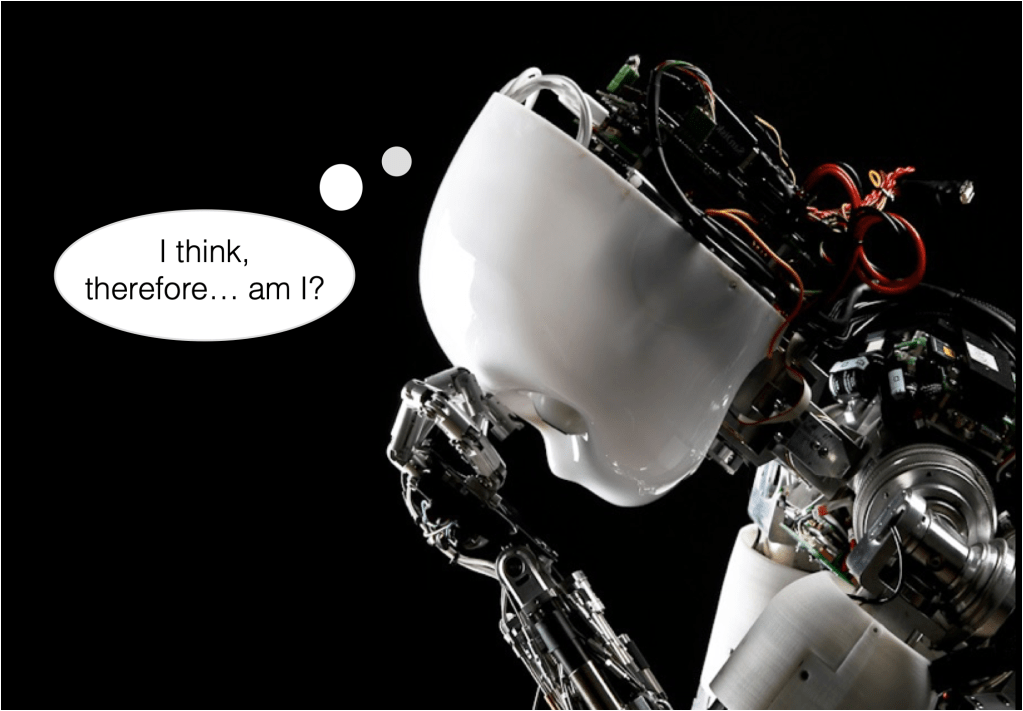
The experience of being, or having, a self—contained within our bodies and able to act in the world—comes naturally to all of us as human beings, along with a feeling of being the same self from day-to-day and of seeing others as also being selves. Our review article, published in Science Robotics, explores how we can use robots to advance the scientific understanding of the sense of self and argues that robots could be useful in two specific ways.
First, we can use computational modelling to develop theories of the sense of self that can be tested in suitably-programmed robots. The programs running inside such robots are designed to emulate processes inside the human mind and brain that relate to the experience of self as understood through psychology and neuroscience. This research suggests that a sense of self develops as the brain’s best explanation of its sensory experience, and its own role in generating those sensory signals. In other words, being a physically-embodied actor, such as a human, or perhaps a robot, is critical to developing a sense of self.
Second, we can use robots as tools for psychological experiments in which we observe how people interact with robots that have some social capacities such as language or joint attention. We can ask whether people experience these robots as social others and whether the mental states they have about robots are similar to those they have when interacting with other people (the short answer is that this is sometimes the case, but not always).
A key idea that is emerging from this research is that the human sense of self is not just one thing, but is made up of many ongoing processes. Two such processes are the sense of “owning” your own body and the sense of having “agency” (control) over your actions. Both of these aspects of self are present in human infants, and, as explained in the paper, we are now able to construct robots that can distinguish their own bodies (the self-other distinction) and detect the consequences of their own actions (agency).
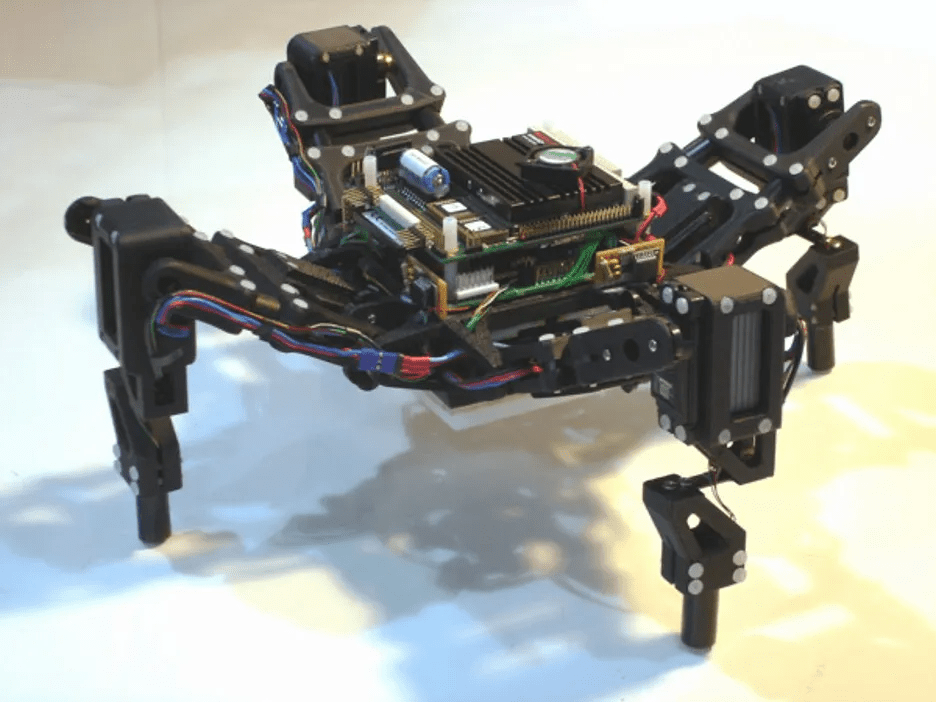
As we pass through childhood other aspects of the sense of self develop. For instance, by age 4, children have a sense of themselves as existing through time, and of other people as also having selves. These aspects of self are beginning to be investigated in robots, for instance, by creating memory systems for robots that are similar to human autobiographical memory. However, this work is at an early stage—current robots do not have awareness of themselves as persisting from day to day, nor are they aware of others (humans or robots) as being selves.

Our article also highlights future directions and open challenges in understanding the self through robotics. One possibility is that we can use robots to test theories about the different experiences of self that we see in people with conditions such as schizophrenia or autism. By improving our theories of self through robotics we hope that we may be able to gain new insights into these conditions and into the diversity of human selves.

For further writing on the sense of self see this Philosophical Transactions of the Royal Society paper on the sense of self in time and this New Scientist article on robot sense of self (available to New Scientist subscribers only, text only version here).
 Meanders in Headspace