This essay, co-authored with Michael Szollosy, was written in 2017 for the book The Architect is Dead edited by Francesco Catemario di Quadri and published online in 2023 (but currently offlline). The wider collection of essays is concerned the impact of technological advances on the architectural profession (hence the architect of the title). In our essay, we begin from the posthuman idea of the human as a bricoleur—a “do-it-yourself make-doer”—and consider what advances in AI could mean for this view of ourselves and for our future lives alongside advanced AI technologies. The view of the human as a cyber-physical system described here is further developed in my 2024 book The Psychology of Artificial Intelligence. The field of AI has advanced considerably since this essay was penned with advances usch as large language and fonudation models. Nevertheless, I believe the core ideas of the essay still apply.
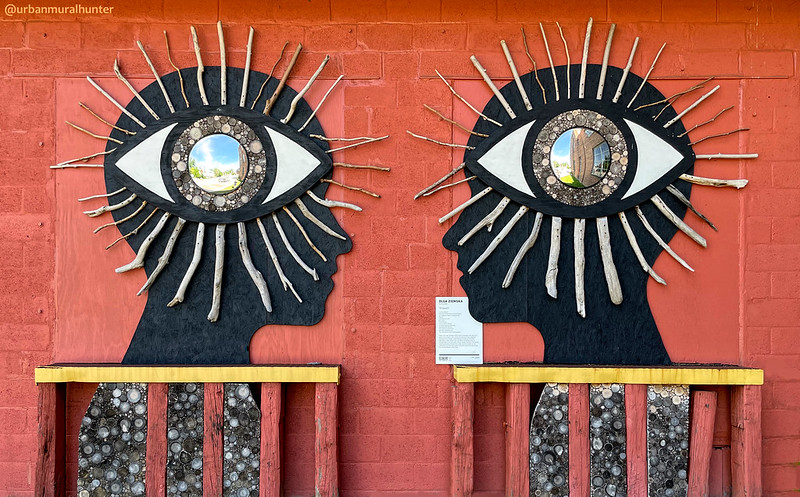
In his 1962 book, The Savage Mind, French anthropologist Claude Lévi-Strauss introduced a particular conceptualisation of bricolage—do-it-yourself constructions where old ends are reinvented as new means. Lévi-Strauss’ idea of bricolage was subsequently adopted across a broad range of disciplines, including not only anthropology but also culture studies, psychology, information systems, education, engineering and, of course, architecture.
At the heart of Lévi-Strauss’s formulation was an idea that was commensurate with the postmodern age, and that likewise celebrates Roland Barthes’ famous proclamation of the ‘death of the author’ (1967). One might even say that in the bricoleur Lévi-Strauss had prepared a ready-made successor to the author. For behind all of these notions lies a dissatisfaction with, and we might even say a well-founded distrust of, the Grand Narratives of modernism (Lyotard 1984). The assassination of the author at the hands of Barthes—and the subsequent dismemberment of the corpse by Michel Foucault (1969)— was, in reality, an acceptance that we have arrived at the end of the Enlightenment project, an end to those discourses and ideologies that arose from reason and were governed by an imagined natural progression to the fixed end-point of the modern human. Dead is that author that would embark upon a sacred quest; dead, too, is the auteur, the master visionary with a clear idea of some final product who gathers all about him to realise his singular vision. There is no more method, no more plans, no blueprints, no grand designs.
Instead, we hail the rise of the postmodern bricoleur, the do-it-yourself make-doer, who takes what is available, a bit of this, a bit of that, these things already lying around to make something new. The bricoleur is not hindered by the deterministic vision or by the demands of ideology or by master narratives; the bricoleur is free: free to assemble in any way that strikes her or his fancy in ways that make sense at any particular point.
Posthumanism
The bricoleur should, in this conception, be the unrivalled hero of the cybernetic age. In a world of endless open networks, uninhibited by the constraints of overall control, free to weave a path between nodes that never depends on a centre. This postmodern world is populated by posthumans—a sort of homo sapien unhindered by design, ungoverned by ideology and liberated from the imagined certainties that held together its old-fashioned human(ist) ancestors (e.g. Braidotti, 2013; Ferrando, 2013; Szollosy 2017). The bricoleur would seem to be the ideal posthuman, a human re-fashioned by the process of bricolage itself, made from a bit of this biology and a bit of that technology, destroying traditional humanist boundaries between nature/nurture, producer/consumer, self/other, networked with other posthumans and integrated with our technologies like never before. Indeed, Deleuze and Guattari (1972) declared bricolage as the mode of production in the postmodern world, a view endorsed by Sherry Turkle, in her 2011 book, Life on the Screen, who regards the bricoleur, or the ‘tinkerer’, as she envisions her, as the model for programming.
However, we now have a much better idea as to what Artificial Intelligence (AI) and robotics can do, and will come to do, in the near future. And now many are questioning whether there will be a place for the laissez-faire, casual labour of even the bricoleur in the age of the robot, where more and more jobs, in architecture as elsewhere, are automated and in a world governed by AI’s omniscience and efficient rationality (e.g. Ford 2015). Might it be the case instead that this dissembled, disorganised, decentred, deregulated posthuman is now under threat from a new form of government? To what extent is the posthuman, so integrated with technology, now at the mercy of the program? As the algorithms of AI take on a greater and greater role in our decision-making, and in our economics and social media, they may become the new authority that governs human societies. The old humanist human was rendered thoroughly obsolete by the postmodern posthuman. The author was replaced by the bricoleur. Will we now see the posthuman rendered obsolete by the robot? The bricoleur replaced by the machine?
The short answer is yes
And the anguish of that realisation is rarely out of the news. But the longer answer is that AI has some way to go to match the architect, and whilst, for some, this might proffer the possibility for a revived humanism this is a temporary respite, instead, we foresee that the posthuman bricoleur will intermingle with the machine.
Our human intellects are put in the shade by AI’s speed, precision, accuracy, and faultless memory and, increasingly, by its ability to see patterns in data (argued by Dreyfus, 1992, to be one of the things that computers wouldn’t be able to do). Nevertheless, if classic AI exceeds us at deductive reasoning, and neural networks at inductive learning, there remains a gap to be bridged: AI cannot yet match the human ability to reason beyond the data—to make that abductive leap to the best explanation (Lipton, 2004). Herein lies one (temporary) hope for the celebrants of human specialness.
Abduction requires the ability to see the simple in the complex, to understand the question in its essence and at the right level, difficult for AIs due to the notorious frame problem—the apparent inability of the logic machine to know what is, and what is not, relevant to its current challenge. The growing enthusiasm for Bayesian inferential frameworks (e.g. Doya et al., 2006) may help us reason to more probable explanations but this still requires assigning prior probabilities and deciding those is a dark art. Framing the question, and fixing the starting point and parameters, remains a task for the skilled human artisan.
For the moment, then, some reassurance can be found in the artificiality and encapsulated nature of contemporary AI. Powerful perhaps, but sufficiently different to us. We stand out for our creativity, our depth of feeling, our sense of who we are. For that arch defender of human uniqueness, John Searle (1990), it was always so, how could we possibly have believed that minds were computers?
From the perspective of the architect, the machine finds useful patterns in the data, it calculates and it constructs, but there is no conception of what a building is, of who it is for, or how it might be used—essential and basic elements of meaning in the architectural domain. The machine can throw together all the necessary elements of a building in a way that will work, but it will not know where to begin or if the outcome it is right or not. The architect must still pull the levers and provide the human reassurance of fit for purpose. The machine has become the bricoleur but in usurping that role has it shown that there is something special to the human after all? That judgement, taste, and simply knowing why, are not part of the algorithm?
Borrowed time
So for the time being, the human still stands at the head of the human-machine team, and like Rembrandt autographing the work of his apprentices, might seek to reclaim the role of auteur as ever more of the grunt work is performed by devices. But at what point does the apprentice surpass the master?
When, in 2016, Google DeepMind’s AlphaGo beat human Go champion Lee Sedol some observers were surprised by the creativity of its gameplay—that it made inventive moves beyond those a human player might conceive (Metz, 2016). One year on and AlphaGo, which was trained on a database of expert human gameplay, was soundly thrashed (100-0) by little brother AlphaGo Zero. What was the difference? Zero learned the game from scratch simply by playing against itself, no human experts in the picture (at least not of the Go-playing variety). AlphaGo reminds us that human intellect does not set the ceiling for machine intelligence (see also Bostrom, 2014).
But let’s not get carried away. Go is played on a 19×19 grid using only black and white stones. In AI terms this is a ‘micro-world’ and AlphaGo Zero is a ‘narrow AI’. Still, Zero’s modus operandi—reinforcement learning—is a universal tool: define the problem, set the success criteria and hit (Alpha) “go”. Peek inside the AI toolbox and there is a lot more there than just the reinforcement learning hammer. You will find the chisel of unsupervised learning, the power drill of Bayesian inference, and, to stretch the metaphor, a whole socket set of classic AI algorithms. Yes, we still need the human to assemble the complete device but for how long? The domains of evolution and development are also being conquered by the algorithm and with them self-assembly, reproduction, and design without a designer (Prescott, Lepora and Verschure, 2018). The machine will, in the end, tinker with, and reinvent, itself.
But what then of the Chinese Room thought experiment? That minds have meaning and programs are just process (Searle, 1990). This humanist tank-trap also looks set to fail (and has seemed broken for some time).
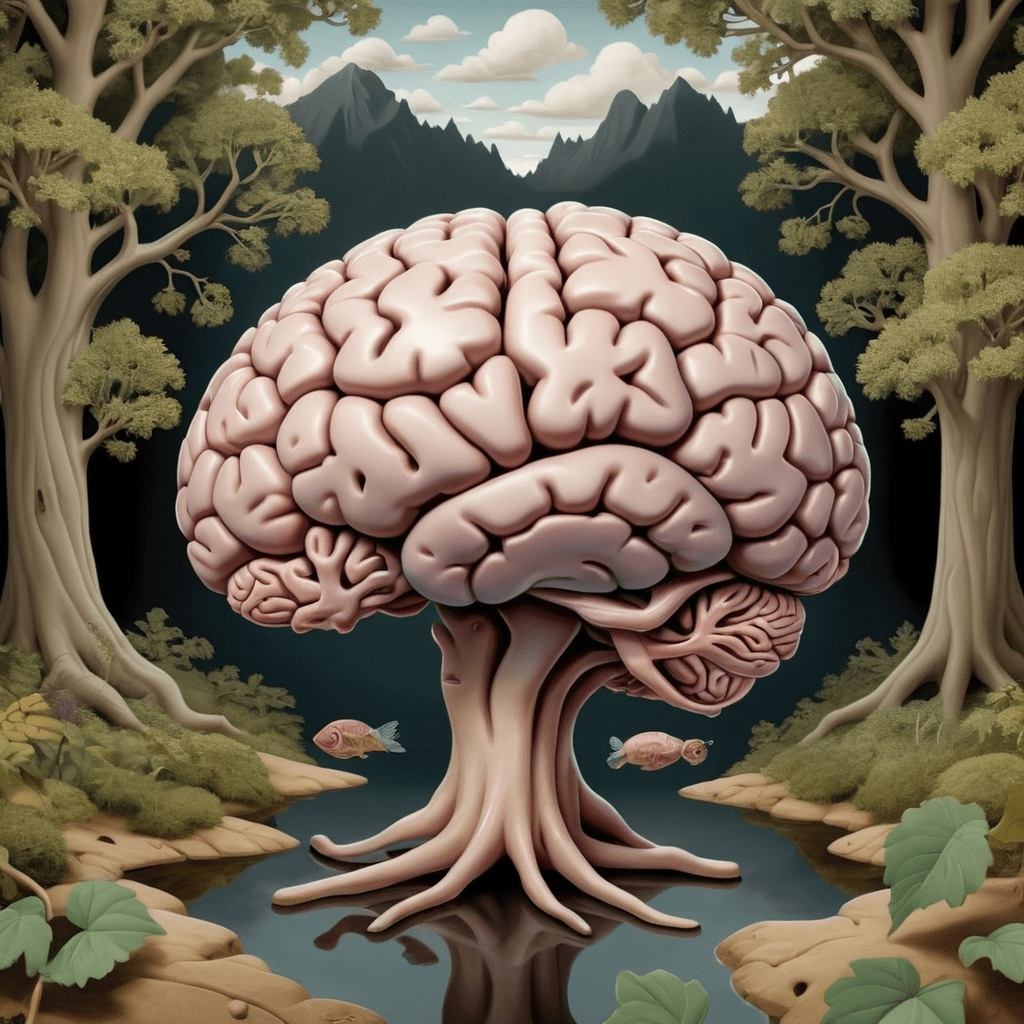
The brain, in its staggering complexity, retains some mysteries, but the most likely brain theory is again the toolbox, the brain as a layered amalgam of different kinds of reactive, adaptive, and inferential machines, operating across different scales of time and abstraction, and with the capacity to attune the dynamics of the inner world with those of the external one (e.g. Prescott et al., 1999; Doyle and Csete, 2011; Clark, 2011; Swanson, 2012; Verschure et al. 2014). The meaning that happens in human minds arises through this attunement of inside to out and is intricately bound up with our embodiment, our sensorimotor capacity, and our embeddedness in the world (Clark and Chalmers, 1998; Clark, 2011). But strong AI can also find meaning in the world through corporeality, for instance, via robotic bodies (Harnad, 1994; 1995). In which case meaning is not something special, or unique to the biological, but the (weakly) emergent consequence of the right kind of world-body coupling, such that if “one can just set in motion an appropriately structured internal dance of syntactic elements, appropriately connected to inputs and outputs, it [the machine] can produce the same cognitive states and achievements found in human beings” (Churchland and Churchland, 1990, p.34). Indeed, if meaning is in the extended mind, surely AIs can participate? Then, as the machine scales, it could develop a new aesthetics of taste and the metaphysics of why, or, contribute to their further deconstruction.
From the biological to the cyber-physical
With this extension comes a new working hypothesis—that the human condition is that of a cyber-physical system (CPS): the integration of computation with physical processes and with feedback loops through the world (see e.g. Giese et al., 2012; Khaitan and McCalley, 2015 for definitions of CPSs). This is different from the hypothesis that Searle sought to refute, that the mind is a computer, because of the deep intertwining of the physical and computational components of a CPS, and the core constraints of operating in real-time in the physical world and of networking with multiple desynchronised systems in the virtual one. But this view gives no ground to the specialness of brain biochemistry, other than as means of instantiating more universal principles of communication and robust control (Alderson and Doyle, 2010). Rather it asserts that the human is a kind of biological robot, and one with a natural affinity to mesh with others and for self-extension via technology.
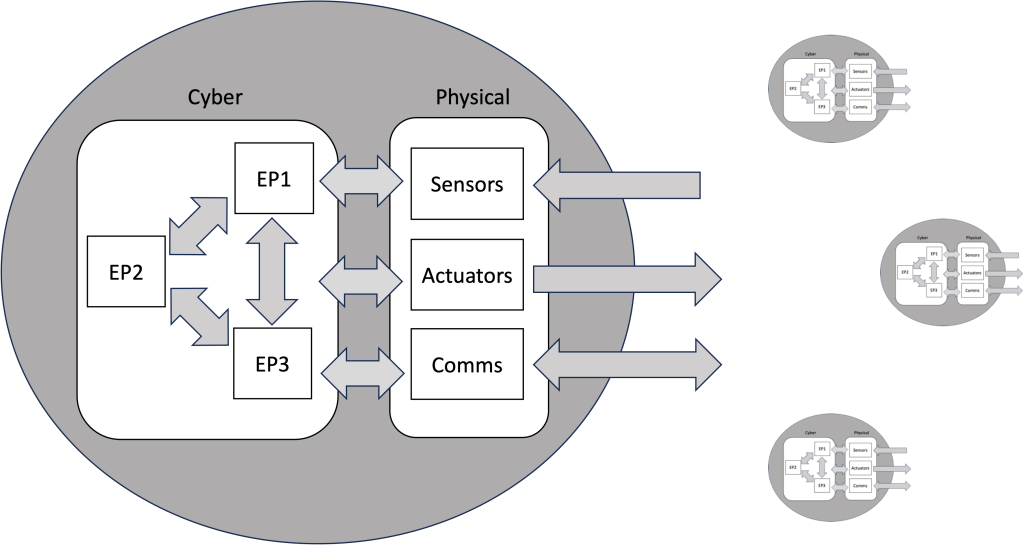
The attempt to create embodiment for AI through robotics—and thus to show that meaning lies outside the individual mind and transpires from the syntactic dance—is ongoing (for some example systems see Cangelosi and Schlesinger, 2014; Prescott, 2015; Moulin-Frier et al., 2017). For now the machine is only at the point of discovering that it has a body and that there is a world. In other words, it is at the level of an infant. Nevertheless, assembled and integrated, exposed to the world via suitable robotic bodies, it seems increasingly plausible that new kinds of cyber-physical machines will come to match, join and eventually surpass the human in these final domains of knowing, judging, and experiencing (Prescott, 2017); just as we come to redefine what we understand by these terms with new mathematics and methods that bridge from biological to technological systems (Alderson and Doyle, 2010) and from engineering to the humanities.
So where does this leave the bricoleur? In the process of building this machine we will have come to a new view of what it means to be (post)human, using the machine as our mirror. And here is the hope. In the past we have seen ourselves through a glass, darkly; now we will see face to robot face. As we better understand what we are, there can be an opportunity to form a clearer and more sustainable relationship with our world.
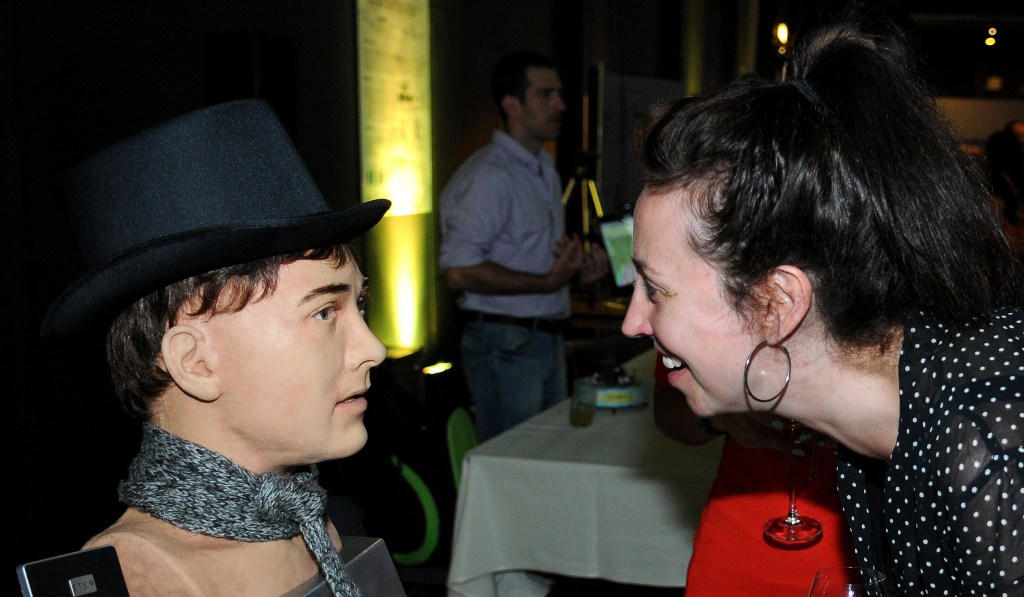
The transformation of our mode of production—from the author to the bricoleur, from modernism to postmodernism—freed us from the shackles of the old human and his humanism. Seeing ourselves as a society of cyber-physical entities further strips us of these conceits. Perhaps in this new era we will no longer be bound by the binary logic of producers and consumers, human and machine, and the preoccupation with our skull-encapsulated selves. Building these new machines and integrating them with the human, could even mean that we surpass the limits of our own thinking (Clark 2003; Prescott, 2013). In this world, the posthuman architect, the cyber-physical do-it-yourself make-doer, could have infinite scope to design and improve.
This essay should be cited as Prescott, Tony J. and Michael Szollosy. 2023. “The architect as a cyber-physical system.” In The Architect is Dead, edited by Francesco Catemario di Quadri, thearchitectisdead.com/read/chapter16, Accessed Day Month Year.
References
Alderson DL, Doyle JC (2010). Contrasting views of complexity and their implications
for network-centric infrastructures. IEEE Transactions on Systems, Man and Cybernetics Part A: Systems and and Humans, 40: 839–852.
Barthes, Roland. (1967). Death of the Author. Aspen: The Magazine in a Box. 5+6. http://www.ubu.com/aspen/aspen5and6/index.html
Bostrom, N. (2014). Superintelligence: Paths, Dangers and Strategies. OUP: Oxford.
Braidotti, R. (2013). The Posthuman. Cambridge: John Wiley & Sons.
Cangelosi, A. and Schlesinger, M. (2014). Developmental Robotics: From Babies to Robots. Cambridge, MA: MIT Press.
Churchland, P. M. and Churchland, P. S. (1990). Could a Machine Think? Scientific American. January 1990, pp. 32-37.
Clark, A. J. and Chalmers, D. J. (1998). The extended mind. Analysis 58 (1):7-19.
Clark, A. J. (2003). Natural-born Cyborgs: Minds, Technologies and the Future of Human Intelligence. Oxford: OUP.
Clark, A. J. (2011). Supersizing the Mind: Embodiment, Action and Cognitive Extension. Oxford: OUP.
Deleuze, G., & Guattari, F. (1972). Anti-Oedipus, trans. Robert Hurley, Mark Seem, and Helen R. Lane (Minneapolis: University of Minnesota Press, 1983), 1.
Doya, K., Ishii, S., Pouget, A. and Rao, R. P. N. (2006). Bayesian Brain: Probabilistic Approaches to Neural Coding. Cambridge, MA: MIT Press.
Doyle, J. C. and Csete, M. (2011). Architecture, constraints, and behavior, PNAS 108 (Supplement 3) 15624-15630; doi:10.1073/pnas.1103557108
Dreyfus, H. (1992). What Computers Still Can’t Do: A Critique of Artificial Reason. MIT Press.
Ford, M (2015). Rise of the Robots: Technology and the Threat of a Jobless Future. Basic Books: New York.
Foucault, M. (1969/1977). What is an Author? in Bouchard, D. F. ed., Michel Foucault: Language, Counter-memory, Practice: Selected Essays and Interviews, New York: Cornell University Press, pp. 113-138.
Ferrando, F. (2013). Posthumanism, transhumanism, antihumanism, metahumanism, and new materialisms: Differences and relations. Existenz, 8(2), 26–32.
Giese, H., Rumpe, B., Schätz, B. and Sztipanovits, J. (2012). Science and Engineering of Cyber-Physical Systems (Dagstuhl Seminar 11441), Dagstuhl Reports, vol. 1, no. 11, pp. 1–22..
Harnad, S, (1994) Does the Mind Piggy-Back on Robotic and Symbolic Capacity? In H. Morowitz & J. Singer (eds.) The Mind, the Brain, and Complex Adaptive Systems. Santa Fe Institute Studies in Complexity XXII: 204-220.
Harnad, S. (1995) Why and How We Are Not Zombies. Journal of Consciousness Studies 1: 164-167.
Khaitan, S. K. and McCalley, J. D. (2015). Design Techniques and Applications of Cyber-Physical Systems: A Survey. IEEE Systems Journal, vol. 9, no. 2, pp. 350-365,
doi: 10.1109/JSYST.2014.2322503
Lévi-Strauss, C. (1962). The Savage Mind. Trans. George Weidenfield and Nicholson Ltd. Chicago, IL: University of Chicago Press.
Lipton, P., 1991. Inference to the Best Explanation, London: Routledge.
Lyotard, J. F. (1984). The Postmodern Condition: A Report on Knowledge (Vol. 10). University of Minnesota Press.
Metz, C. (2016). The sadness and beauty of watching Google’s AI play Go. Wired Magazine, 3.11.16, accessed on 24th November 2017. https://www.wired.com/2016/03/sadness-beauty-watching-googles-ai-play-go/
Moulin-Frier, J. C., et al. (In Press). DAC-h3: A Proactive Robot Cognitive Architecture to Acquire and Express Knowledge About the World and the Self. IEEE Transactions on Cognitive and Developmental Systems.
Prescott, T. J., Redgrave, P. and Gurney, K. (1999). Layered control architectures in robots and vertebrates, Adaptive Behavior, 7, 99-127.
Prescott, T. J. (2013). The AI singularity and runaway human intelligence. In Lepora et al. Biomimetic and Biohybrid Systems; The Second International Conference on Living Machines, Lecture Notes in Computer Science Volume 8064, pp. 438-440.
Prescott, T. J. (2015). Me in the Machine. In Being Human: in G. Lawton (ed). The Inside Story of What it Means to be One of Us. New Scientist: The Collection, 2(3), pp. 20-23.
Prescott, T. J. (2017). Robots are not just tools. Connection Science, 29(2), 142-149. doi:10.1080/09540091.2017.1279125
Prescott, T. J., Lepora N. and Verschure, P. F. M. J. (In Press). Living Machines: A Handbook of Research in Biomimetic and Biohybrid Systems. Oxford, UK: OUP.
Searle, John (1992). Is the Brain’s Mind a Computer Program? Scientific American, January 1990, pp. 26-31.
Swanson L, W. (2012). Brain Architecture: Understanding the Basic Plan. 2nd Edition. New York: Oxford University Press.
Szollosy, M. (2017). EPSRC Principles of Robotics: defending an obsolete human(ism)? Connection Science 29(2), 150-159.
Turkle, S. (2011). Life on the Screen. Chicago: Simon and Schuster.
Verschure, P. F. M. J., Pennartz, C. M. A. and Pezzulo, G. (2014). The why, what, where, when and how of goal-directed choice: neuronal and computational principles. Phil. Trans. R. Soc. B 369 20130483; DOI: 10.1098/rstb.2013.0483.

